Date Published
August 10, 2025
Total Read
5 min
Tags
The tech world is buzzing about AI coding tools. Lovable, Bolt, Cursor, GitHub Copilot, Codex, Claude Code, and dozens of other AI tools are generating code faster than ever. The narrative is clear: we have finally solved the coding bottleneck that has held back software development for decades.
There is just one problem with this narrative—it is completely wrong.
After years of working as both designer and engineer on complex projects with tight deadlines, I can tell you with certainty: writing code was never what slowed us down.
The real bottlenecks in software development are:
Code reviews and knowledge transfer
Testing and debugging
Human coordination and communication
The endless maze of Jira tickets, planning meetings, and agile rituals
These processes require thought, shared understanding, and sound judgement—things that cannot be automated away with better code generation.
AI tools can produce working code in seconds. But what happens next? That code still needs to be:
Understood by the team
Reviewed for quality and security
Integrated with existing systems
Tested for edge cases
Maintained over time
The marginal cost of adding new software is approaching zero, but the price of understanding, testing, and trusting that code has never been higher.
When code is generated faster than it can be reviewed and discussed, teams risk falling into a dangerous mode where quality is assumed rather than ensured. This creates enormous stress on reviewers and mentors, potentially slowing everything down.
Here is where many engineers get lost: there are fundamentally two different types of code we write.
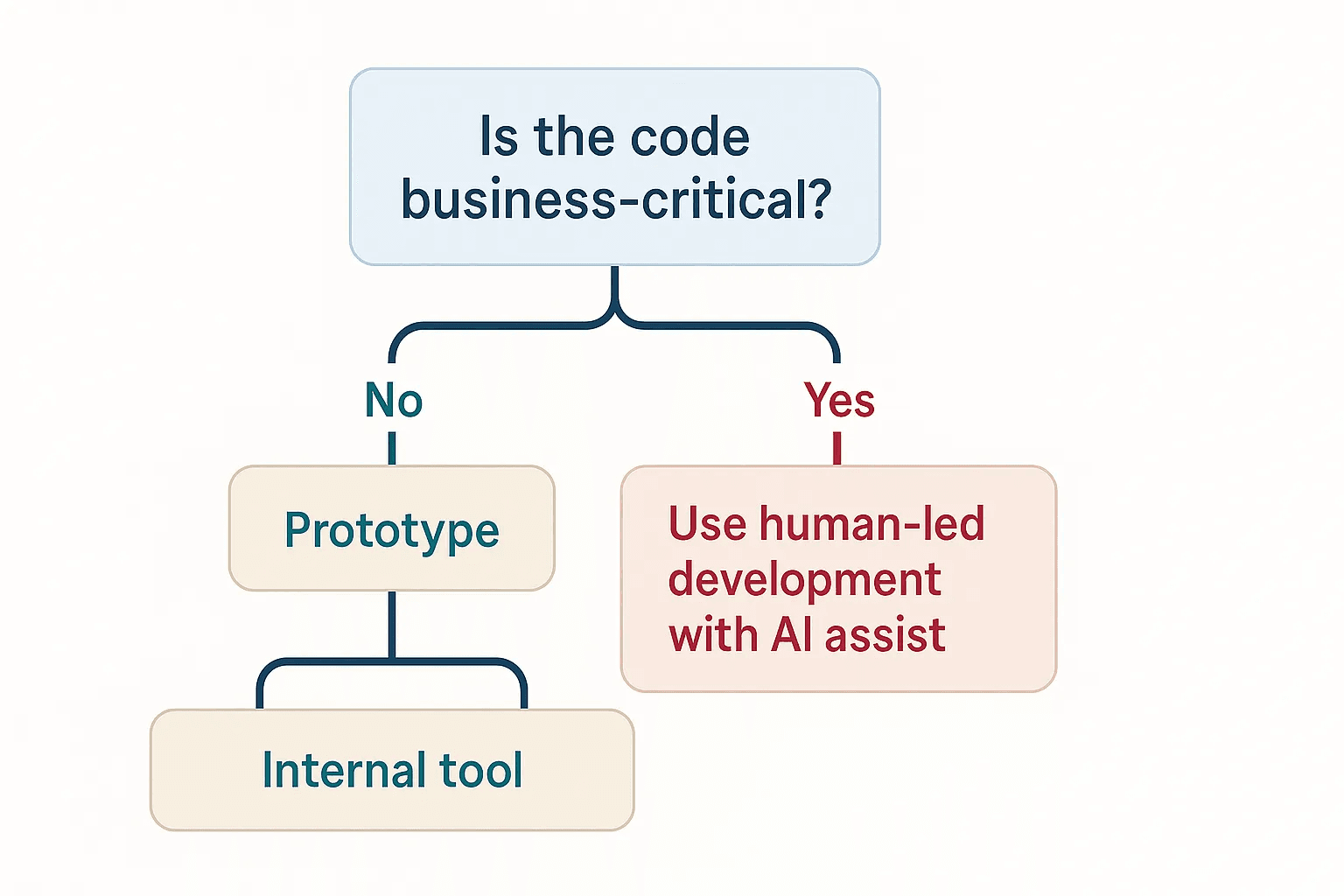
Throwaway Code: Scripts, prototypes, demos, and experiments. The goal is to figure out what to build or whether something can work. Quality does not matter—understanding does.
Production Code: Core infrastructure, main features, and systems meant to be maintained for years. Quality, maintainability, and team understanding are paramount.
The cost difference between these two approaches used to be minimal. Now, with AI tools, that gap has exploded. AI excels at throwaway code but struggles with the collaborative, long-term thinking required for production systems.
The engineers who thrive with AI tools understand this distinction. They use AI for rapid prototyping and exploration, then carefully craft production code with their team. Those who treat all code the same will find AI tools either useless or actively harmful.
Most companies are trying to jam AI tools into their existing development process. This is like trying to fix traffic by making cars faster—you are optimising the wrong part of the system.
Traditional software development follows this painful path:
The product manager identifies the problem
Research with users (often skipped)
Design and mockups
Product specification (5-30 pages)
Presentations and approvals
Technical specification
Development
Ship and pray
This process takes 6-18 months just to get from problem to solution. Making step 7 faster does nothing to address the real bottlenecks in steps 1-6.
Instead of speeding up the final coding step, we should use AI to move building earlier in the process. Rather than spending months writing specifications, we can:
Identify the problem
Build a rough prototype in days
Test with real users
Iterate or kill the idea based on feedback
This approach eliminates most of the traditional process steps because you can prove concepts quickly and write better specifications based on actual working implementations.
One engineer, one designer, and one part-time product manager working this way can save months or years compared to having seven engineers build a poorly specified product.
Many AI coding tools are optimising for the wrong metrics. They make it easier to generate massive amounts of code but harder to understand, review, and maintain it.
These tools often:
Remove the enjoyable parts of development (coding, prototyping)
Replace them with tedious tasks (reviewing generated code, reading AI-generated specifications)
Create perverse incentives to generate more code rather than simpler solutions
This mirrors what happened when typewriters and word processors made laws longer but not better. More words did not equal better legislation—and more code does not equal better software.
Most engineers prefer:
Writing code and having conversations
Experimenting with new ideas
Simplifying and deprecating unnecessary complexity
We do not enjoy:
Reading lengthy specifications
Sitting in unproductive meetings with 10+ people
Reviewing code, we do not understand the purpose of
The best AI tools will amplify the parts of our job we love whilst minimising the parts we hate—not the other way around.
To truly benefit from AI coding tools, we need to rethink our entire development process, not just make the final step faster.
Use AI for:
Rapid prototyping and exploration
Testing feasibility quickly
Generating throwaway code for experiments
Avoid using AI for:
Production code that needs long-term maintenance
Critical systems where every line matters
Code that will be reviewed and maintained by teams
The future of software development is not about writing less code—it is about writing the right code at the right time for the right purpose.
Understanding that distinction will determine whether AI makes your team faster or just generates more problems to solve.
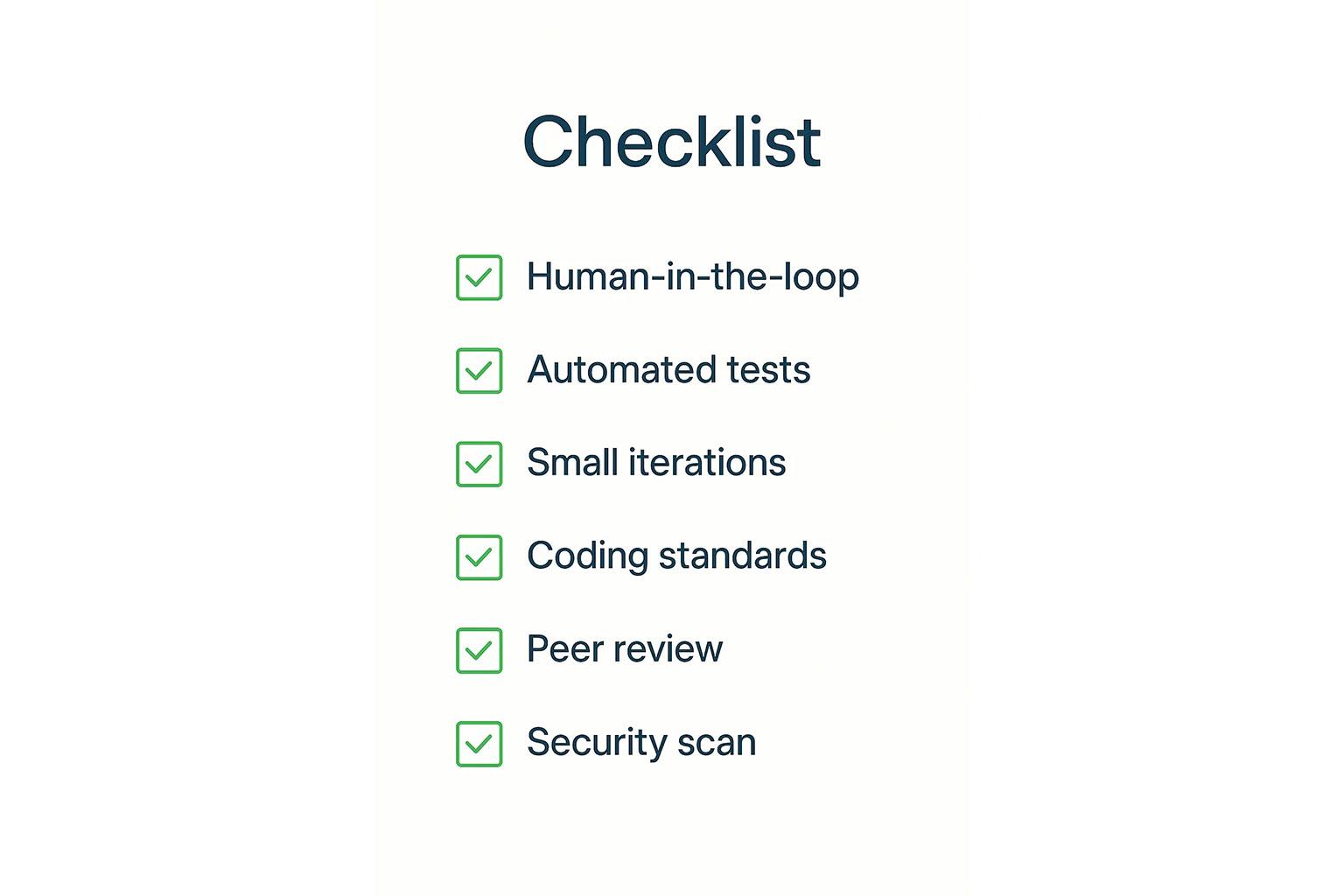
The real bottleneck in software development has always been understanding what to build and why. Until AI can solve that problem, we are just making the easy parts easier, whilst the hard parts remain unchanged.