I wanted to share some insights into how reinforcement learning (RL) fundamentally transforms AI models, particularly OpenAI's latest version of ChatGPT. (o1-preview)
Traditionally, language models excelled at predicting the next word in a sentence, generating coherent and contextually appropriate text. This made them valuable tools for tasks like brainstorming and creative writing. However, the introduction of reinforcement learning has fundamentally altered the capabilities of these models.
Reinforcement learning allows AI to experiment within an environment and learn from its actions to achieve specific goals. This approach has been successfully employed in recommendation systems like those used by TikTok, Spotify, and Netflix, where algorithms learn from user interactions to keep them engaged. RL enables these systems to adapt in real-time, continuously optimizing for user satisfaction and engagement.
ChatGPT's application of RL, however, takes a different path. Instead of maximizing user engagement, its objective is to provide accurate and helpful answers to any question posed. When faced with a complex problem, ChatGPT doesn't just generate a statistically probable response. It generates a chain of thought, analyzes its reasoning, assesses its correctness, and recursively refines it until it arrives at a clearer, more accurate, and precise solution. This process mimics human problem-solving in many ways, allowing for more nuanced and contextually appropriate responses.
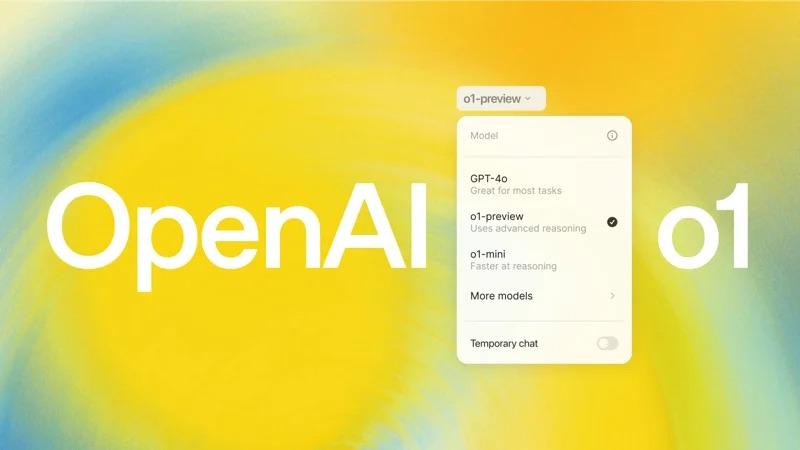
The latest release, OpenAI o1, represents a significant advancement in AI technology. It's designed from the ground up to tackle complex problems by creating logical chains of thought and exploring various solutions. This opens up new possibilities for "prompt engineering" - the art of formulating effective instructions for AI systems.
Advanced reasoning capabilities through chain-of-thought processing
Exploration of multiple solution paths within its internal reasoning
Ability to handle complex, multi-step problems more effectively
Improved performance on tasks requiring strong reasoning abilities, such as mathematical problem-solving and coding
Enhanced natural language understanding and generation
These features allow o1 to excel in areas that previously challenged AI systems, such as multi-step reasoning tasks, complex problem-solving, and even some forms of creative thinking.
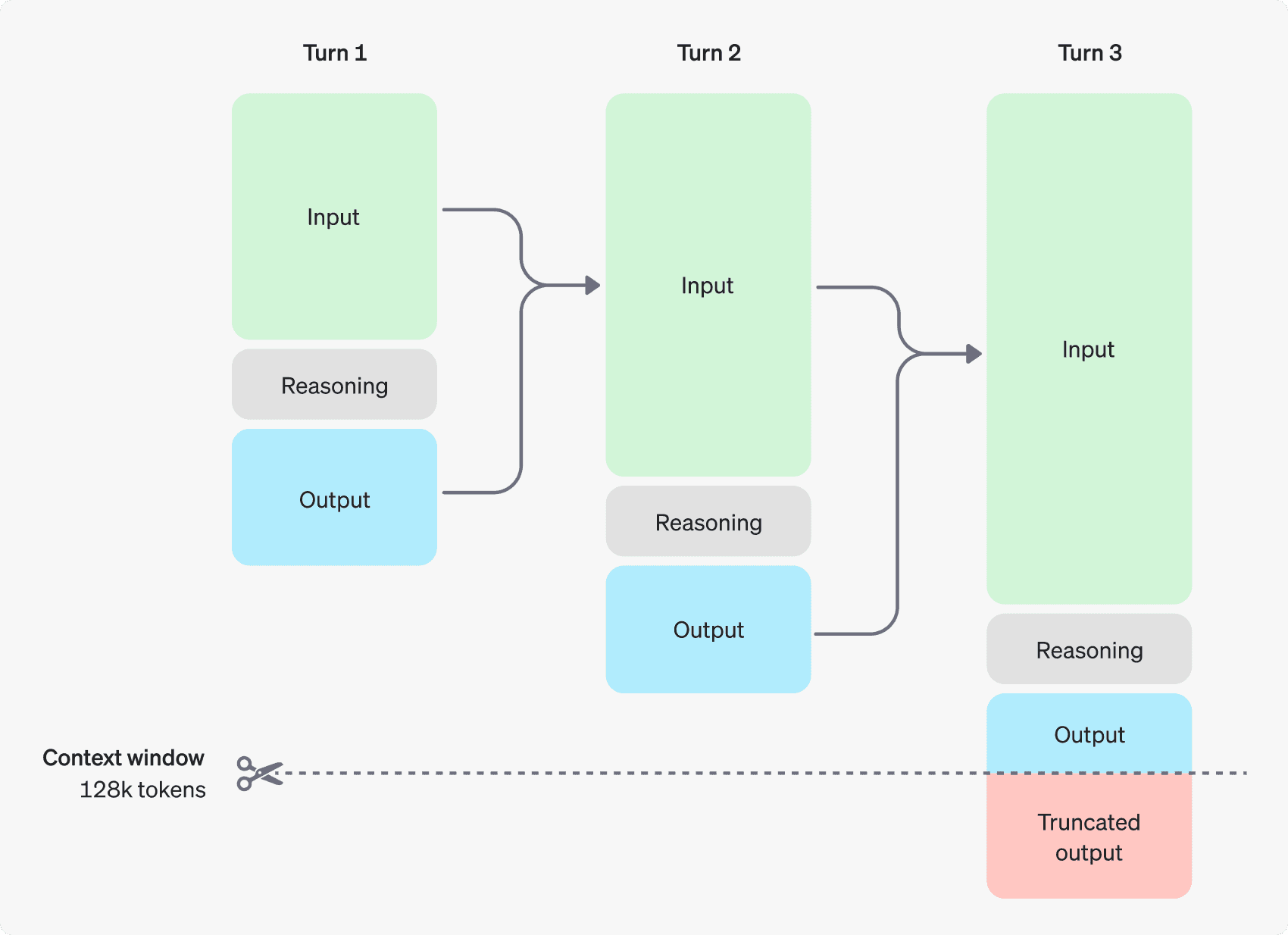
One of the key innovations in o1 is the use of "reasoning tokens". These are internal thought processes generated by the model before producing a final answer. While users don't see these tokens directly, they contribute to more thoughtful and accurate responses.
Break down complex problems into manageable steps
Consider multiple perspectives or approaches
Evaluate the strengths and weaknesses of different solutions
Synthesize information from various sources
Refine and improve its initial thoughts before presenting a final answer
This process results in more coherent, logical, and well-reasoned responses, even if the user only sees the final output.
User Query: What is the area of a circle with a diameter of 10 cm?Reasoning Tokens (hidden from user):
1. Recall formula: Area of circle = π * r^2
2. Diameter given is 10 cm
3. Radius is half of diameter: r = 10/2 = 5 cm
4. Substitute into formula: Area = π * (5 cm)^2
5. Simplify: Area = π * 25 cm^2
6. Calculate: Area ≈ 78.54 cm^2 (rounded to 2 decimal places)Final Response to User:
The area of a circle with a diameter of 10 cm is approximately 78.54 square centimeters.This example illustrates how the model might use reasoning tokens to break down and solve a problem step-by-step, even though the user only sees the final answer.
As we develop these AI models, we may be inadvertently uncovering insights into the mechanics of human cognition. Consider these parallels:
Iterative Refinement: Both o1 and humans engage in self-reflection and correction when problem-solving. We often revise our initial thoughts as we work through complex issues.
Pattern Recognition: AI and human brains excel at identifying patterns in complex data sets. This ability is crucial for learning and adapting to new situations.
Goal-Oriented Behavior: AI models are driven by programmed objectives, similar to how humans are motivated by various goals. This goal-directed behavior shapes decision-making processes.
Adaptive Learning: Reinforcement learning in AI mirrors how humans learn from experience, adjusting strategies based on outcomes and feedback.
Chunking Information: The way o1 breaks down complex problems into smaller, manageable parts is similar to how humans use chunking to process and remember information.
However, it's crucial to acknowledge the limitations of this comparison. Human cognition involves emotional intelligence, deep contextual understanding, creativity, and consciousness - aspects that current AI systems cannot fully replicate. Humans also possess intuition and the ability to make cognitive leaps that AI still struggles to emulate.
While the o1 models represent an advancement, some experts argue that the improvements may be overstated:
Potential Overstatement of Capabilities: The "reasoning" capability might be more of a sophisticated prompt engineering technique rather than a fundamental change in the model's architecture.
Increased Cost and Computational Load:
The generation of reasoning tokens consumes additional computational resources.
Users are billed for these extra tokens, even though they don't see them in the final output.
This could result in slower response times and higher costs per query compared to previous models.
Potential for Hallucination in Hidden Processes: There's a risk that errors or hallucinations in the hidden reasoning tokens could lead to inaccurate final outputs without the user being aware of the source of the error.
Comparison to Existing Techniques: The approach is similar to existing prompt engineering techniques, particularly the "chain of thought" prompting method. The main difference is that OpenAI has integrated this process into the model's operation.
The development of AI serves as both a tool for understanding cognition and a mirror that reflects the uniqueness of human intelligence. As we continue to advance AI technology, the goal should not be to create a perfect replica of human cognition, but rather to develop AI as a complementary tool that enhances our understanding of intelligence in all its forms.

More sophisticated reasoning capabilities that can handle even more complex, multi-domain problems
Improved ability to explain its reasoning process, enhancing transparency and trust
Better integration of common sense knowledge and real-world understanding
Enhanced capabilities in creative tasks, potentially revolutionizing fields like art, music, and literature
More advanced natural language processing, potentially breaking down language barriers globally
Despite the rapid advancements, it's not too late to join the AI revolution. Here's how you can get started:
Create an OpenAI account and experiment with the o1 models. Start with simple queries and gradually increase complexity.
Practice formulating different types of tasks and problems. Learn how to craft effective prompts that elicit the best responses from the AI.
Focus on solving real, complex problems from your daily life or work. This could include data analysis, creative writing, coding challenges, or strategic planning.
Explore the ethical implications of AI. Understand the potential biases and limitations of these models.
Stay updated on the latest AI developments through reputable sources and academic publications.
Consider taking online courses or attending workshops on AI and machine learning to deepen your understanding.
Remember that understanding how to effectively use these models could become a valuable skill in the future job market. Develop your ability to work alongside AI tools.
The future belongs not just to those who can create AI, but also to those who can communicate effectively with it. By learning how to craft effective prompts and leverage the reasoning capabilities of models like o1, you can unlock AI's full potential and help shape tomorrow's technological landscape.
As we stand at the forefront of this AI revolution, the possibilities are endless. Whether you're a tech enthusiast, a professional looking to enhance your skills, or simply curious about the future of technology, now is the perfect time to engage with these advanced AI models. The journey promises to be exciting, challenging, and full of opportunities for innovation and discovery.
If you're interested in more accessible insights into AI and its developments, let's connect! Share your experiences, questions, and thoughts on how AI is transforming your field or daily life. Together, we can navigate this rapidly evolving landscape and explore the incredible potential of AI technology.