In a groundbreaking development that's sending ripples through the tech world, OpenAI has unveiled its latest model, O3. As someone deeply immersed in the frontend development and UX design space, I find this advancement particularly fascinating, not just for its technical achievements, but for what it means for the future of how we build and interact with digital products.
The most striking aspect of O3 isn't just its impressive benchmark scores – though they are remarkable – but rather what these scores represent. We're seeing a fundamental shift in how AI models can adapt to and solve novel problems. For developers and designers, this could mean having an AI partner that truly understands the nuances of our requirements and can generate solutions that aren't just functional, but innovative.
O3's achievements are staggering:
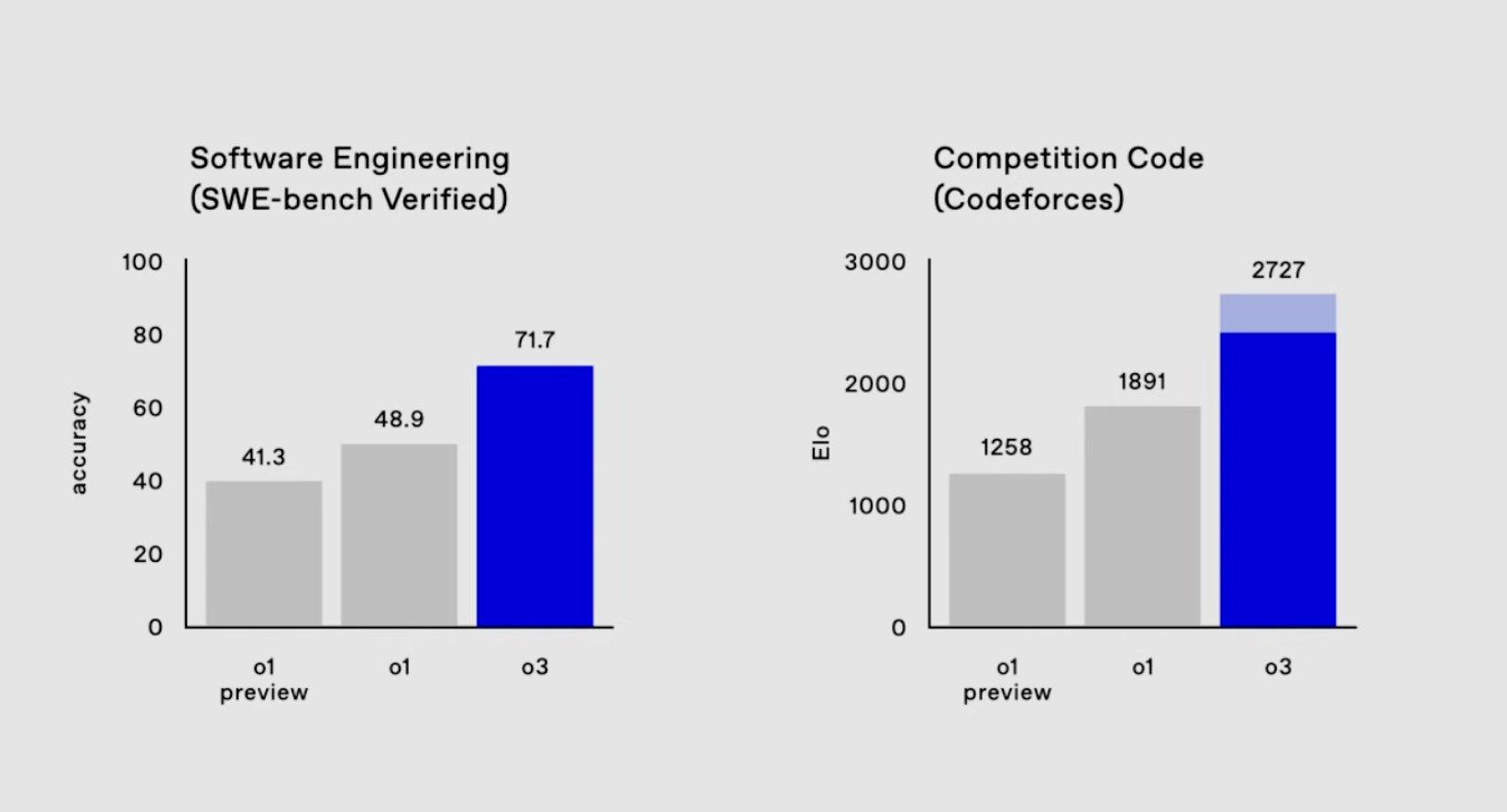
In CodeForce's competitive programming benchmarks, it performs better than 99.95% of human competitors, ranking as the 175th highest-scoring competitor globally
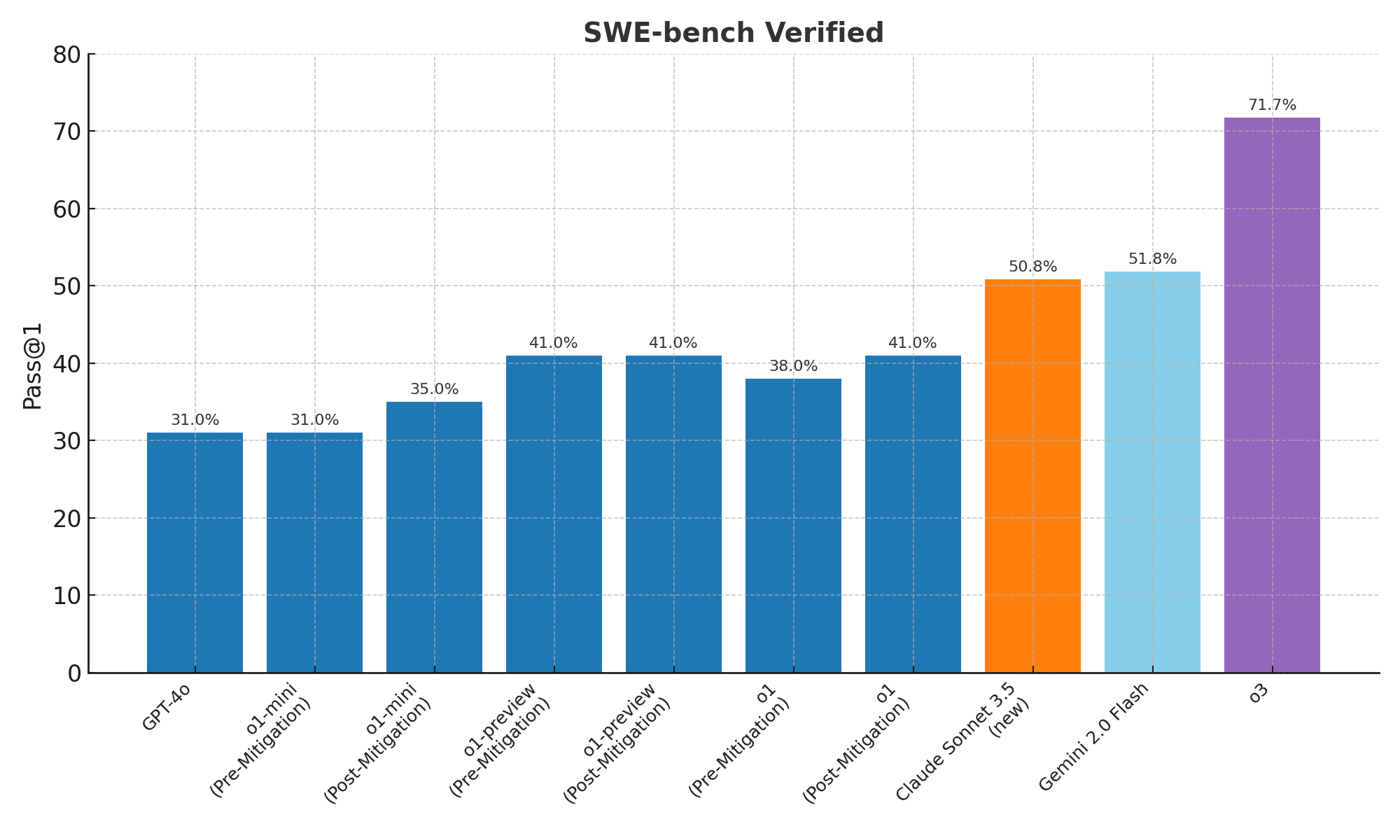
On SWE-bench, a benchmark of verified real-world software engineering tasks, it achieves 71.7% accuracy (compared to Claude 3.5's 49%)
On Frontier Math, a dataset of novel and extremely challenging mathematical problems, achieves unprecedented performance of over 25%
What makes these results particularly interesting is that they're not achieved through any revolutionary new architecture. Instead, O3 represents a scaling up of reinforcement learning approaches, combined with sophisticated verification systems that can check and rank multiple solution attempts.
For those of us working in frontend development and UX design, O3's capabilities hint at a future where:
1. Rapid Prototyping: AI could generate and test multiple UI solutions based on user requirements, significantly speeding up the prototyping process.
2. Code Quality: With its advanced reasoning capabilities, O3-like systems could help identify edge cases and potential accessibility issues before they reach production.
3. Design Systems: AI could help maintain consistency across large-scale applications by contextually understanding and applying design patterns.
It's worth noting that achieving O3's full potential currently comes with significant computing costs. According to ARC-AGI testing data, running O3 in high-efficiency mode costs about $17-20 per task, while the low-efficiency mode (using 172x more computing) dramatically increases the cost. For perspective, the complete ARC-AGI public evaluation test suite (400 tasks) in high-efficiency mode costs approximately $6,677. While these costs might seem steep compared to human labor (which costs roughly $5 per task), OpenAI researchers expect dramatic improvements in cost performance in the coming months and years. As one researcher noted, these capabilities should become economically competitive with human work within a relatively short timeline.
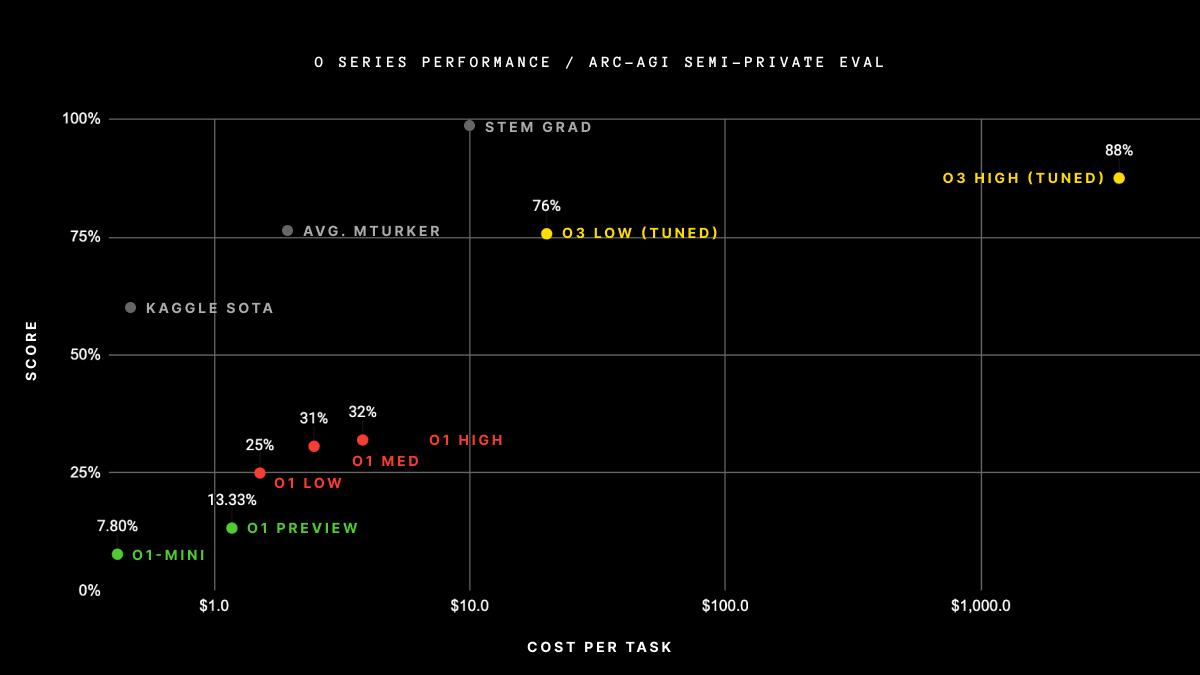
While O3 represents a significant leap forward, it's not yet AGI (Artificial General Intelligence), according to François Chollet, creator of the ARC-AGI benchmark. The model still struggles with certain spatial reasoning tasks and some natural language challenges. However, its approach to problem-solving – generating multiple solutions and verifying them systematically – feels remarkably human-like.
As frontend developers and UX designers, we should start preparing for a future where AI isn't just a tool for automating repetitive tasks, but a collaborative partner in the creative process. This might mean:
- Developing new workflows that leverage AI's strengths while maintaining human oversight
- Focusing more on high-level architecture and user experience strategy
- Learning to write better prompts and requirements that AI systems can understand and execute effectively
O3 represents more than just another incremental improvement in AI technology. It's a glimpse into a future where the boundary between human and machine capabilities becomes increasingly blurred. As professionals in the digital space, we have a front-row seat to this transformation, and the opportunity to shape how these technologies will be integrated into our daily work.
While we're still some distance from true AGI, O3 shows us that the path forward isn't just about bigger models or more data – it's about smarter approaches to problem-solving and verification. For those of us building the digital future, that's an exciting prospect.