Date Published
October 25, 2024
Total Read
3 min
Tags
GPT (Generative Pre-trained Transformer) represents a revolutionary leap in artificial intelligence, fundamentally changing how we interact with machines. Let's explore its inner workings, from basic principles to advanced features.
The name itself reveals three key aspects:
Generative - Creates new content autonomously
Pre-trained - Learns from vast datasets before deployment
Transformer - Employs a specialized neural network architecture that excels at processing sequential data
1. Breaking Down Text
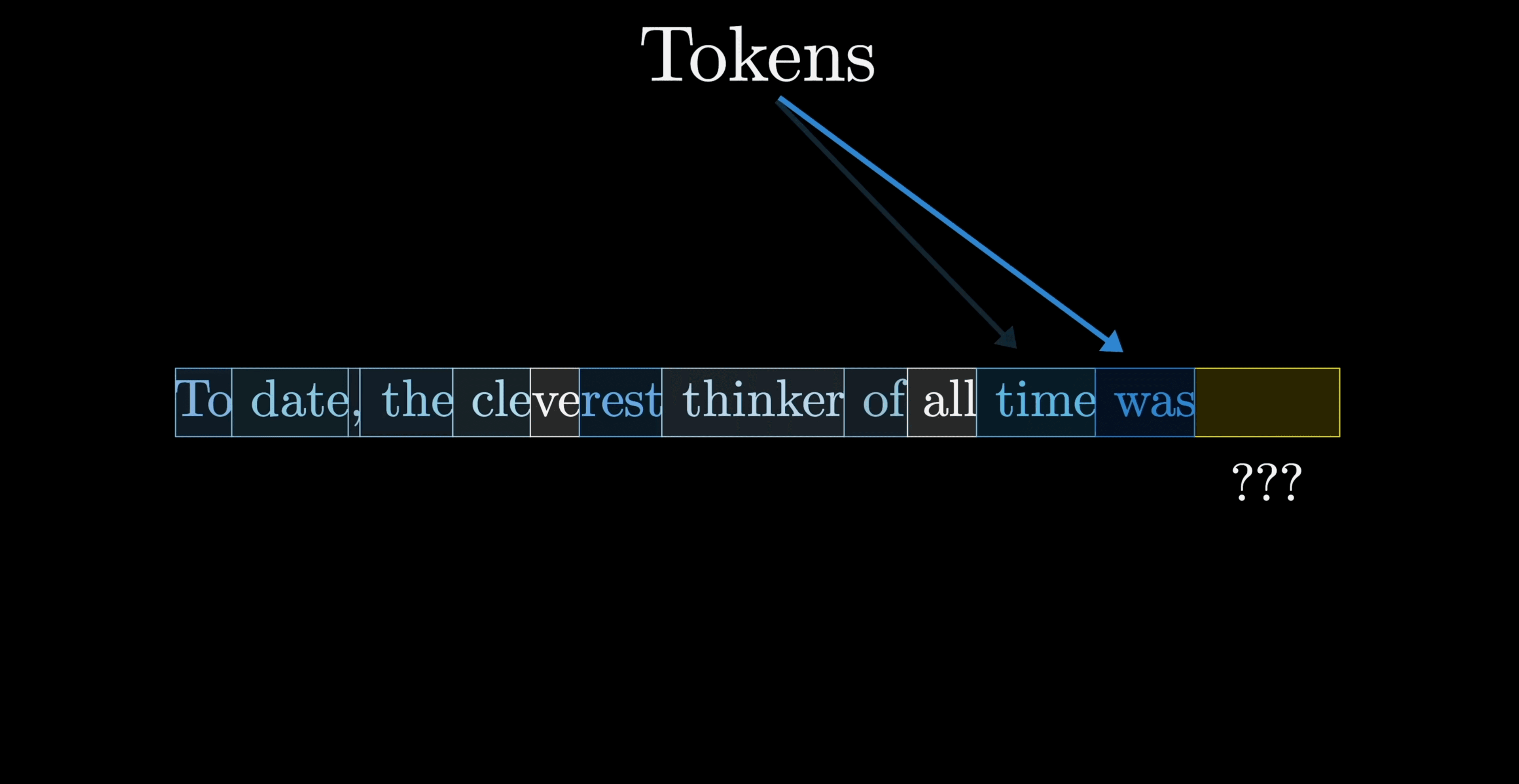
First, GPT breaks text into small pieces called "tokens" (which can be words or parts of words). Think of it like breaking a sentence into building blocks.
Text is broken into tokens (words or subwords)
Each token maps to a specific entry in the model's vocabulary
GPT-3, for example, uses a vocabulary of 50,257 tokens
2. Understanding Context
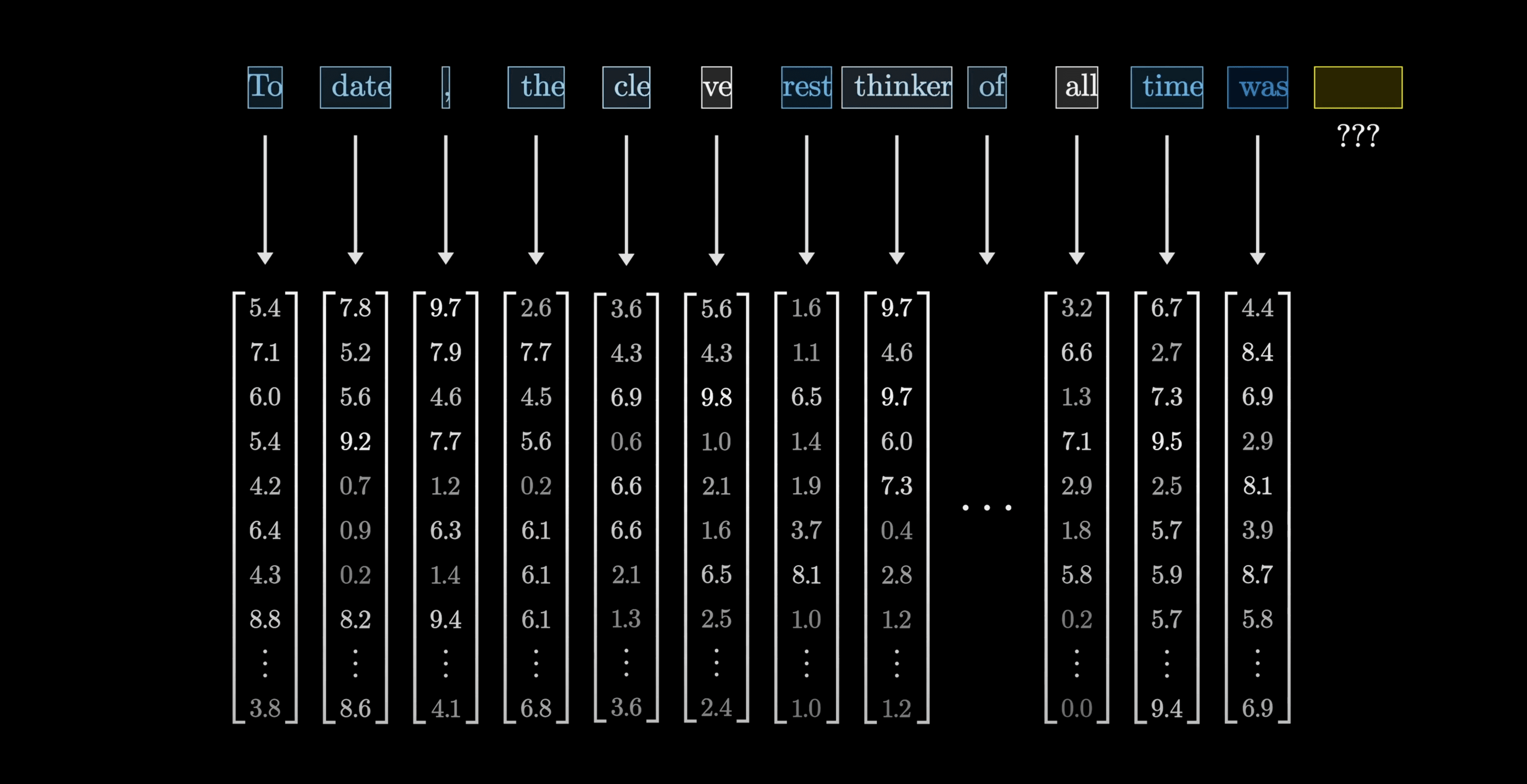
The model turns these tokens into numbers (vectors) that represent their meaning. What's cool is that similar words end up with similar number patterns. For example, "king" and "queen" might have related patterns that reflect their royal connection.
Tokens convert to high-dimensional vectors
GPT-3 uses 12,288 dimensions per vector
Similar words cluster in vector space
Example: "king" - "man" + "woman" ≈ "queen"
3. Attention Mechanism
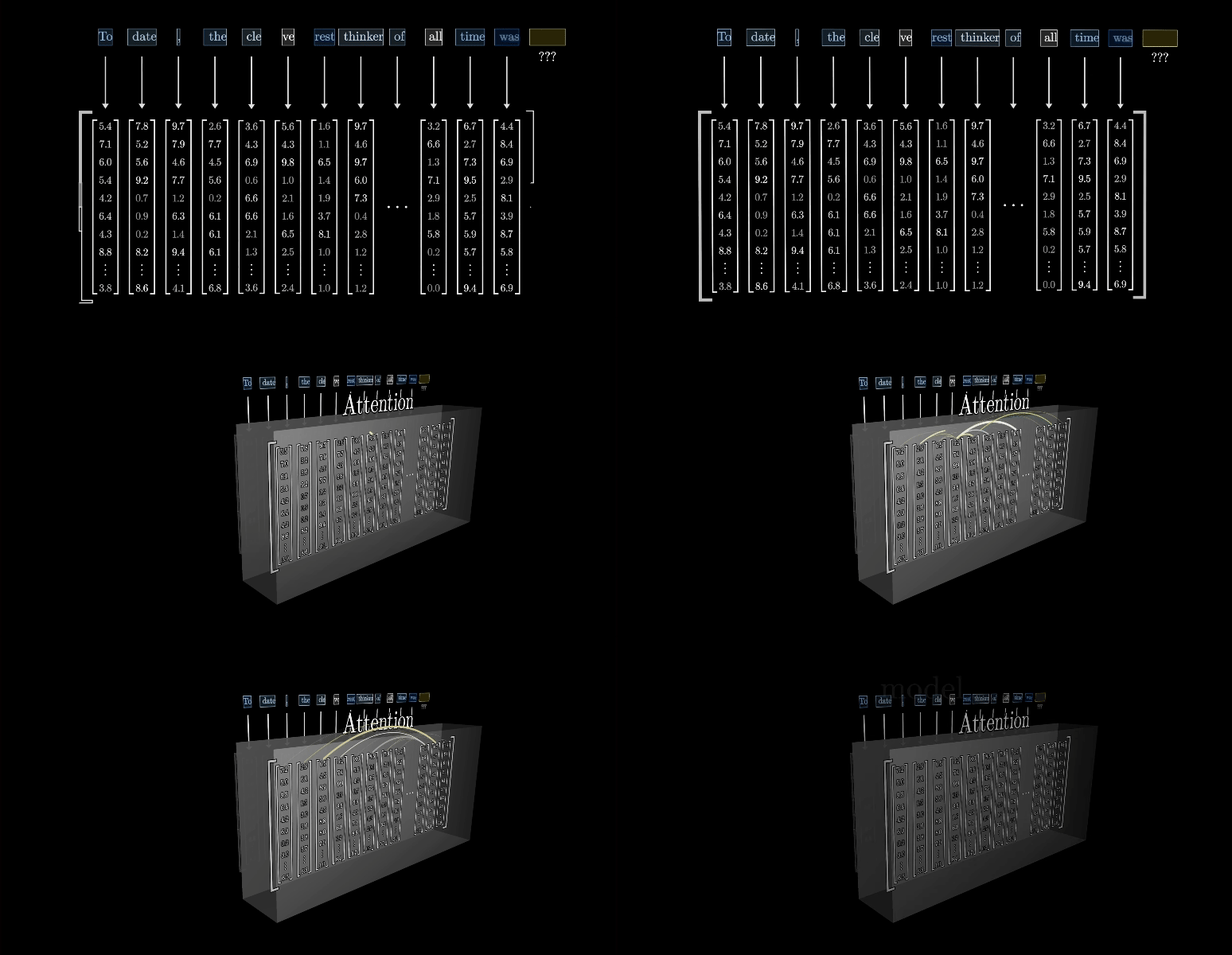
The real magic happens in what's called the "attention mechanism." This lets the model look at all the words in your text and figure out which ones are important for understanding each other. For instance, in "The dog chased its tail," the model knows "its" refers to "dog."
Core innovation of transformer architecture
Allows words to "pay attention" to relevant context
Processes relationships between all words simultaneously
Each word's representation evolves based on the surrounding context
4. Making Predictions:
When generating text, GPT:
Analyze the previous context to predict the next tokens
Uses probability distributions over vocabulary
Employs softmax function to normalize predictions
The temperature parameter controls output randomness:
Low Temperature (t → 0)
Favors high-probability tokens
More predictable, consistent output
Ideal for factual responses
High Temperature (t > 1)
More uniform probability distribution
Increased creativity and variability
Better for creative writing
Think of it like a creativity dial - turn it up for creative writing, and down for factual responses.
Different models have varying context capabilities:
GPT-3: 2,048 tokens
GPT-4: 128,000 tokens
Claude 3.5 Sonnet: 200,000 tokens
This limitation determines how much previous text the model can consider when generating responses..
GPT's understanding evolves through layers:
Initial embedding captures basic word meaning
Attention layers incorporate a broader context
The final representation reflects a nuanced understanding
Example: "king" might evolve from a basic royalty concept to "Scottish king in Shakespearean context"
Modern transformer models excel at:
Speech-to-text conversion
Text-to-speech synthesis
Image generation from descriptions
Code understanding and generation
Mathematical operations
Natural language understanding and generation
Important constraints to consider:
Context Window Boundaries
Models can only process fixed-length contexts
May "forget" information beyond window size
Prediction vs. Understanding
Models make sophisticated statistical predictions
Don't truly "understand" as humans do
Training Data Dependency
Performance limited by training data quality
May reflect biases present in training data
The model processes text through:
Embedding matrix (WE) converting tokens to vectors
Multiple attention and feed-forward layers
Unembedding matrix (WU) producing token probabilities
Softmax function normalizing predictions
This architecture, while complex, enables GPT to handle diverse language tasks with remarkable effectiveness.
As transformer models continue to evolve, we're seeing:
Expanding context windows
Improved multi-modal capabilities
Enhanced reasoning abilities
Better factual accuracy
Reduced hallucination tendencies
Understanding these fundamentals helps us better utilize and develop AI systems while remaining aware of their capabilities and limitations.